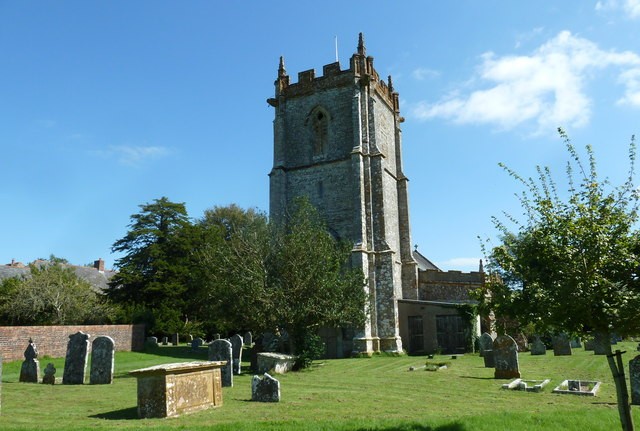
The walk begins by the Church of St Nicholas on the west side of the village. The building dates from the 15th century and is in the elaborate late Perpendicular style, with a lofty tower decorated with some ferocious gargoyles. Inside there are some fine screens and monuments from the 18th and 19th centuries.
Beside the church is a Georgian manor house, Sydling Court, which incorporates part of the Tudor house once owned by the politician and diplomat Sir Francis Walsingham, who was principal secretary to Queen Elizabeth I from 1573 until his death in 1590.
The walk continues into the village past the base of an old stone cross, which marks the place where Sydling's annual fair has been held every December 6th since at least the Middle Ages.
Most of the cottages in the village are thatched and built of flint and Ham stone, a much-prized golden limestone quarried just over the Somerset border to the north-west. Often, the flint and stone are laid in alternate courses for decorative effect. Several brooks and rills run through the village, and cottages are connected to the roads and to one another by footbridges.
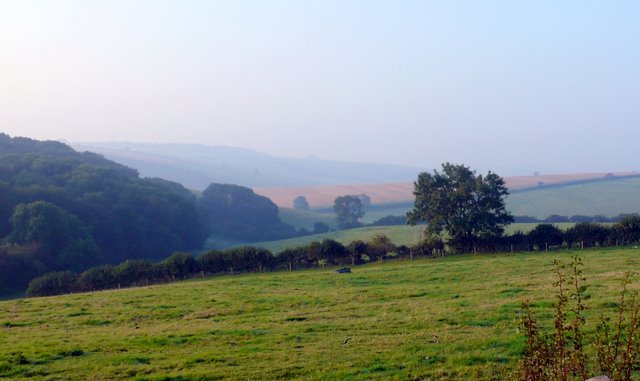
A long, steady climb out of the village takes you up onto the downs, where you walk south along the ridge between Large Bar Barn and the site of an old covered reservoir to the north of Crete Hill. On this ridge-top section of the walk there are wonderful views west over the Sydling Valley and south to the seaward-facing hills.
You walk down a banked green track into Pond Bottom, then climb again to where there are some low banks and enclosures — the remains of a large Celtic settlement. In the Dark Ages, these downlands were well populated and several settlements were scattered along the hilltops. The outlines of their small fields or lynchets can be seen on the surrounding hillsides.
This site, on a saddle of land between two swelling hills, provides another magnificent view over the valley. The route drops down into the valley and passes Huish Farm, with its handsome, lichen-crusted brick boundary wall, before crossing Sydling Water. This little chalk stream is a favourite spawning ground for salmon swimming inland from Poole. Dabchicks dart around huge stands of reeds and flags, while kingfishers and nightingales haunt its banks.
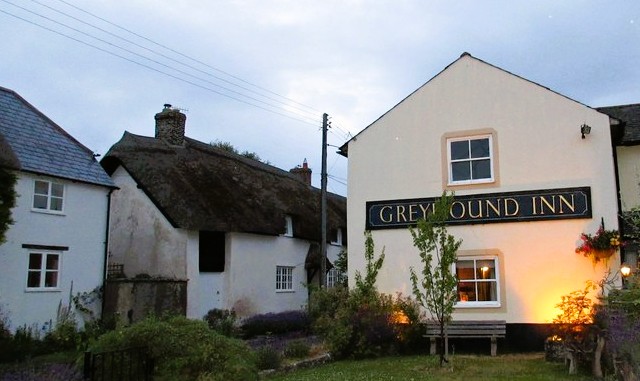
The walk back to the churchyard at Sydling St Nicholas passes a huge tithe barn, whose fine timbers now support a corrugated-iron roof. If you have time at the end of the walk, it is well worth exploring this gem of a village further. Waterside Lane, as its evocative name suggests, is particularly picturesque. And, if you require refreshments at the end of the walk, the village hostelry, the Greyhound Inn, is most welcoming. There is food, drink, and the Greyhound also has rooms available if you wish to stay overnight in the village.